Science > Biology > Introduction to Biology > Importance of the Study of Biology
List of Sub-Topics:
- Introduction
- Study of Biology as the Study of Life
- Biology and Nature
- Biology and Health
- Biology and Food
- Biology and Horticulture
- Biology and Agriculture
- Biology and Animal Husbandry
- Biology and Medical Science
- Conclusion
- Related Topics
Biology is the science that studies living things, including plants, animals, and human beings. It helps us understand life and the different processes that take place in living organisms, such as growth, reproduction, and interaction with the environment. By studying biology, we learn how living things survive and help maintain the balance of nature. Biology is closely connected to our everyday life. It plays an important role in fields like medicine, agriculture, animal husbandry, food production, environmental protection, and biotechnology. The knowledge of biology has helped humans improve healthcare, develop new medicines, increase food production, and protect endangered plants and animals. Therefore, biology is not just the study of life; it is a subject that greatly contributes to human progress and the well-being of society.
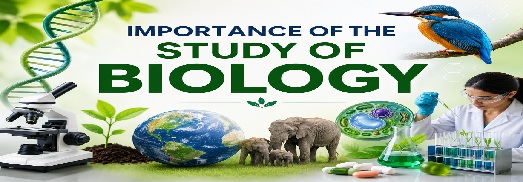
Biology is the branch of science that studies living organisms, including plants, animals, and human beings. The word “Biology” is derived from two Greek words: bios meaning life and logos meaning study. Although it is difficult to determine exactly when the study of biology began, the ancient Greeks are considered pioneers in organizing and developing this field of science.
The study of biology also flourished in ancient India between 2500 B.C. and 650 B.C. Great scholars such as Charaka and Sushruta practiced medicine effectively and contributed significantly to medical science. In Greece, Hippocrates (460–377 B.C.), known as the “Father of Medicine,” introduced a rational approach to the treatment of diseases.
Another important Greek scholar was Aristotle (384–322 B.C.), often called the “Father of Biology.” He studied animals, including marine organisms, in great detail. Although some of his ideas, such as believing the heart controlled intelligence, were incorrect, his observations laid the foundation for future biological studies. His student, Theophrastus (370–285 B.C.), made important contributions to the study of plants and is regarded as the “Father of Botany.”
During the Renaissance period, Leonardo da Vinci (1452–1519) advanced the study of human anatomy by dissecting human bodies and drawing detailed illustrations of body systems. These drawings greatly improved the understanding of anatomy and medicine. Later, in 1543, Andreas Vesalius published De humani corporis fabrica (The Structure of the Human Body), which accurately described human anatomy through detailed illustrations.
For a long time, biology mainly focused on classifying organisms and studying the visible structure of living beings. However, the invention of the microscope by Antonie van Leeuwenhoek opened a completely new world of microscopic life. In the 19th century, important scientific ideas such as the theory of evolution and cell theory were proposed and accepted, leading to rapid progress in biology. The 20th century witnessed the growth of modern fields like genetics and biotechnology.
Importance of the Study of Biology
Biology and Nature
The natural world is full of an amazing variety of plants and animals. Biology helps us understand the similarities and differences among living organisms. Botanical gardens, parks, and zoos not only provide knowledge but also offer enjoyment and recreation.
Plants are cultivated to beautify homes and surroundings, while flowers are used for decoration and celebrations. Keeping pets and caring for animals can also improve emotional well-being and help reduce stress-related illnesses. Through the study of biology, endangered species of plants and animals can be protected and conserved for future generations.
Biology and Health
Biology helps us understand the structure and functions of the human body. By studying anatomy and physiology, we learn how different organs work and how diseases affect the body.
Many diseases are caused by microorganisms such as bacteria, viruses, fungi, and parasites. Diseases like cholera, plague, and malaria have caused major epidemics in human history. Biology helps scientists identify disease-causing organisms, understand how diseases spread, and develop methods for prevention and treatment.
The study of biology has also made modern surgery possible. Damaged organs and body parts can now be repaired or replaced through advanced medical techniques. Many medicines are obtained from plants, while antibiotics are produced from fungi and microorganisms. Veterinary science, another branch of biology, focuses on the treatment and care of domestic and pet animals.
Biology and Food
Human beings depend on both plants and animals for food. Vegetables, fruits, cereals, fish, chicken, goats, prawns, crabs, milk, and eggs are all important sources of nutrition. Milk from cows and buffaloes is used to produce butter, cheese, curd, and ghee.
Biology helps improve the quality and quantity of food production. For example, hybrid cattle breeds can produce more milk with higher fat content. Scientific knowledge also supports poultry farming, animal husbandry, and veterinary care, helping to protect animals and crops from diseases and improving food production.
Biology and Horticulture
Botany, a branch of biology, plays an important role in horticulture. Scientists develop new varieties of ornamental plants with attractive flowers, unique leaf shapes, and better growth characteristics through hybridization.
Biology has also helped in producing seedless varieties of fruits such as guava, banana, grapes, and papaya, which are more convenient and commercially valuable.
Biology and Agriculture
The rapid growth of the human population has increased the demand for food. Biology has therefore become essential in modern agriculture.
With the help of biological research, scientists have developed high-yielding and disease-resistant crop varieties. Farmers can now grow multiple crops in a year by reducing the crop development cycle. Biology also helps in controlling pests, insects, and weeds through the use of pesticides, fungicides, and weedicides.
Understanding plant diseases allows farmers to prevent crop damage and improve agricultural productivity. In addition, food preservation methods such as pasteurization, drying, freezing, and irradiation help increase the shelf life of food products.
Biology and Animal Husbandry
Animals provide many useful products that are important in daily life and industry. Leather is obtained from the hides of mammals, silk from silkworms, wool and fur from sheep and lambs, fish oil from fishes, honey and wax from honey bees, lac from lac insects, and pearls from pearl oysters. Other animal products such as shells, horns, and corals are also valuable.
To increase the production of these products, different branches of animal husbandry are practiced, including poultry farming, pig farming, fish farming (pisciculture), silk farming (sericulture), bee keeping (apiculture), and lac culture. Proper knowledge of the habits, habitats, food requirements, and life cycles of animals helps improve productivity and ensures better care and management of these organisms.
Biology and Medical Science
Biology and medical science are deeply connected because medicine depends on the understanding of living organisms, especially the human body. Biology helps us learn about the structure and functions of different organs, tissues, and body systems. This knowledge allows doctors and scientists to identify diseases and find proper treatments.
The study of biology also explains how harmful microorganisms like bacteria, viruses, fungi, and parasites spread diseases. With this understanding, scientists have been able to develop medicines, vaccines, and antibiotics that save millions of lives. Biology also helps in understanding hereditary diseases through genetics and supports modern treatments such as organ transplantation, blood transfusion, and gene therapy.
Many medicines are obtained from plants and microorganisms, which shows the importance of biology in the field of medicine. In addition, biology creates awareness about hygiene, nutrition, and healthy living, helping people prevent diseases and maintain good health.
Conclusion:
Biology plays a vital role in improving human life and understanding the natural world. It helps us study living organisms, maintain good health, increase food production, protect the environment, and develop advances in medicine, agriculture, horticulture, and animal husbandry. The knowledge of biology not only improves the quality of human life but also helps in conserving plants and animals for future generations. As science and technology continue to grow, biology remains one of the most important fields for the progress and well-being of society.
Related Topics:
- Biology and Nature
- Biology and Health
- Biology and Food
- Biology and Agriculture
- Biology and Medical Science
- Biology and Criminal Investigation